
Eisuke Ikeda explores the visual intensity that emerges in moving image when colour, light and motion come together. Central to Eisuke's practice is this relationship between colour, light, and composition. The aim is not to present a clear narrative or fixed interpretation, but to create an encounter in which the viewer's eye and attention can respond naturally, a direct, one-to-one engagement with the work.
How would you describe your artistic practice?
My practice centres on moving image and abstract visual expression through colour, light, and movement. Rather than treating moving image simply as temporal change, I approach it as a form that emerges through time while sustaining the pictorial intensity of painting. My concern is therefore not only with movement itself, but with how colour, light, form, and composition resonate together within a single image.
My decisions begin with how my eye and sensibility respond to what appears on screen. Working with digital tools, colours, forms, speeds, and displacements can arise in ways that exceed my expectations. From within these moments of chance, I select what holds my attention and draw it into the work.
I also produce short moving image pieces on a continuous basis, using Instagram and YouTube as a kind of visual notebook. Alongside more resolved works, I document experiments in which speed or movement has developed differently from what I initially anticipated. These posts function less as a catalogue of finished works than as an ongoing archive that accumulates process and change over time.
For me, a completed moving image is not necessarily an endpoint. I sometimes return to earlier works — cropping, layering, and reconfiguring them as material for new pieces. Revisiting this accumulated body of work can reveal possibilities that were not apparent at the time of making, allowing those possibilities to develop into new works or series.
Through this ongoing process of making and reconfiguration, I explore the pictorial intensity that arises when colour, light, and movement converge, and the possibilities of visual expression that unfold through time.
What is the role of colour in your artwork?
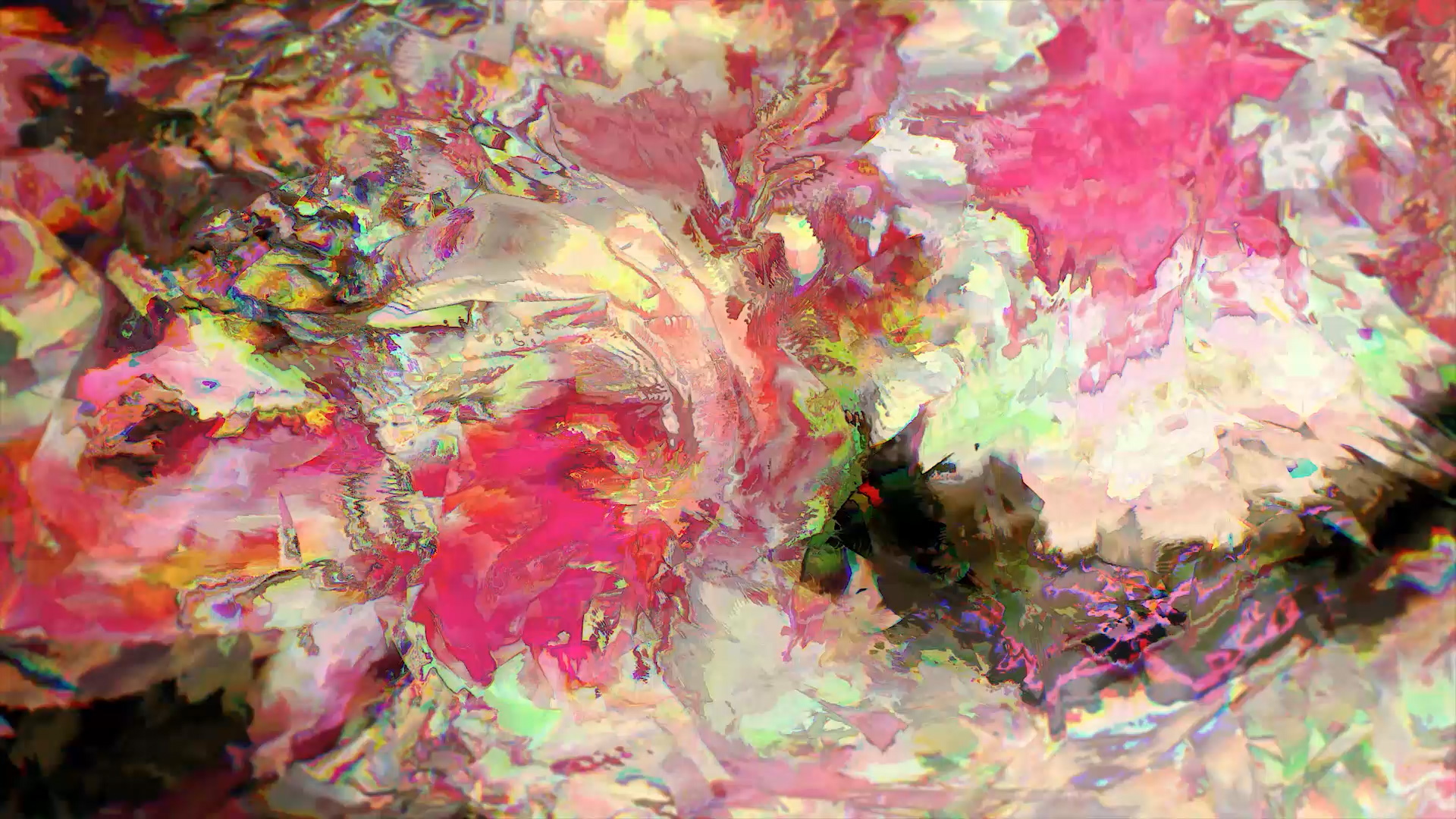
Colour plays a central role in my practice. When beginning a work, my primary concern is how colours resonate with one another within the image. Rather than assigning fixed meanings or symbolic associations to a palette in advance, I take the response of my own eye and sensibility — at the moment an image appears on screen — as my point of judgement.
When a combination of colours arrests my gaze and moves me, I want to hold that image and develop it further as a work. For me, colour is less a sign used to convey meaning than a direct source of visual pleasure and pictorial intensity.
Some works employ vivid, highly saturated colour, while others are quieter and approach monochrome. Even in these near-monochromatic works, I find myself strongly drawn to states in which faint traces of colour persist — within subtle chromatic shifts, afterimages, and fluctuations of light generated through movement.
Rather than determining the chromatic direction of a work entirely in advance, I more often discover unexpected relationships between colours while working with digital tools and select from what emerges. An unforeseen overlap or transformation of colour can become the point of departure for a new work.
When colour converges with light and movement, I believe moving image can exceed simple temporal change and emerge as an immediate visual experience.
What interests you about working with technology?
My engagement with technology is closely bound up with the period in which I entered university, in the mid-1990s. At that time, Mac computers were becoming accessible to students, and 3D computer graphics software was available at comparatively affordable prices. As these conditions began to take shape, I naturally gravitated towards a predominantly digital practice. Had I begun studying a little earlier, I might instead have developed a practice centred on analogue processes.
At university I studied design and later specialised in moving image design, but I was also introduced to a wide range of analogue processes — sculptural exercises, etching, screen printing, and monochrome photography, including both shooting and darkroom development. Each of these left a lasting impression and continues to inform the foundation of my practice.
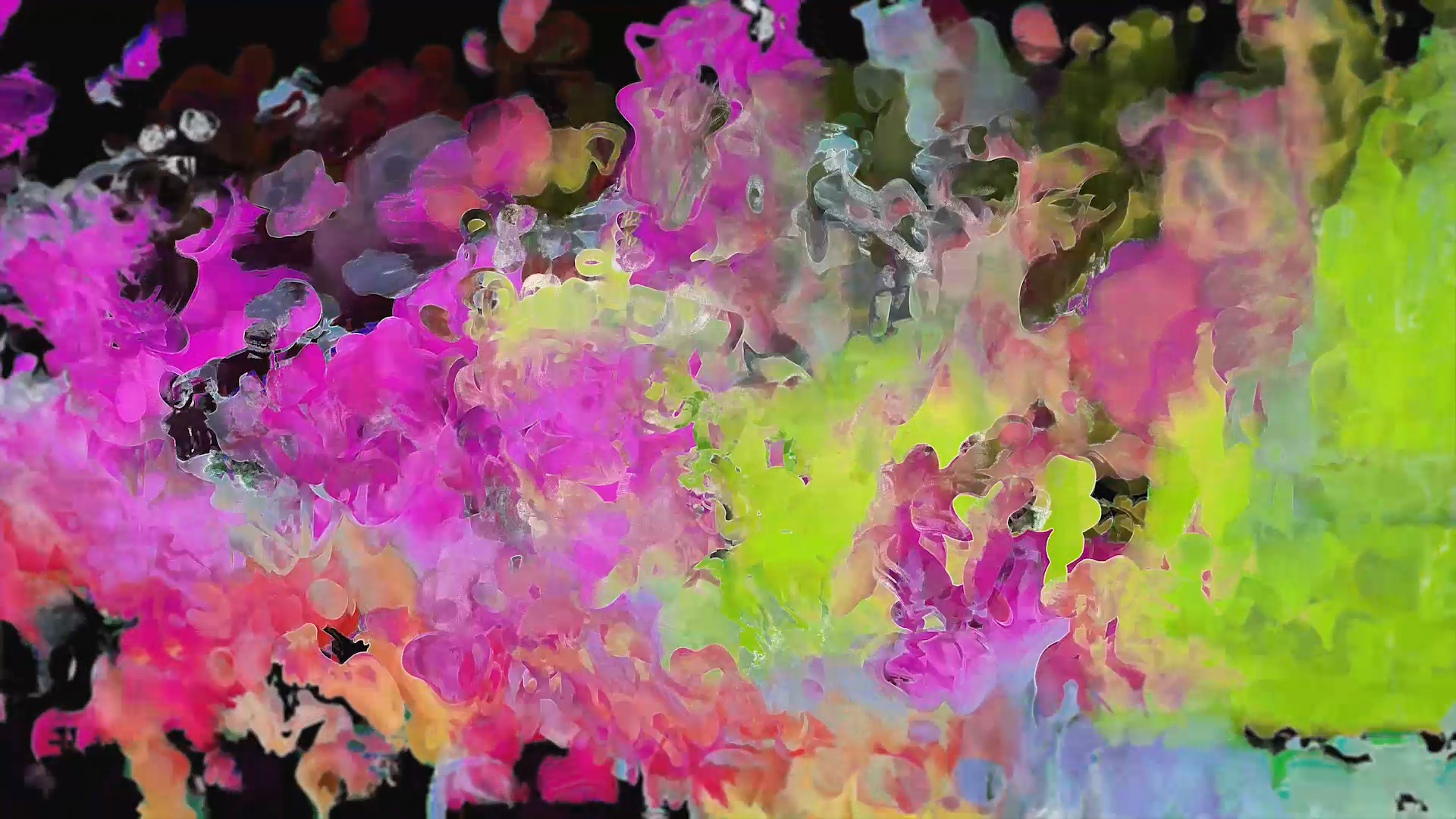
Although my work is primarily digital, I am not drawn exclusively to smooth or perfectly resolved images. My attraction to glitch-like abrasion, subtle displacement, grain, and surface texture is, I believe, connected to the tactile experience of working directly with materials through printmaking, photography, and sculpture. My desire to retain a quality of analogue tactility and imperfection within digital precision also has its roots in those experiences.
What interests me about technology is not only its capacity to realise an intended image with precision. In the process of working, unexpected colours, forms, movements, and displacements can emerge beyond what I had anticipated, opening the way to new visual discoveries.
I am less drawn to technological novelty for its own sake than to the encounter — through technology — with images I could not have conceived alone, and to the space where digital precision and analogue texture meet.
How do you view the relationship between art and innovation?
I do not believe that technological novelty in itself generates artistic value. New technologies and methods of production can make previously impossible images visible and lead artists towards forms of expression that exceed their own expectations. Ultimately, however, what matters is what the artist discovers through the technology, what they select, and how those discoveries are given form as experience within the work.
Advances in digital technology have greatly expanded the means by which colour, light, movement, and time can be approached. They have also transformed not only the conditions in which works are made, but the spaces and contexts in which they are encountered. The fact that moving image works can now be experienced not only in museums and galleries, but within architectural spaces, on screens, and across online platforms has further extended the possibilities of the form.
Yet technical innovation and the capacity of a work to move us are not necessarily the same thing. However sophisticated the technology employed, without the artist's own sensibility and acts of selection, a work risks remaining little more than a demonstration of technique.
I also hold that digital expression is grounded in our experience of light, materials, texture, and embodied sensation in the physical world. Even while working with new technologies, I want to retain traces of analogue tactility — abrasion, grain, subtle displacement — within the work itself.
For me, the relationship between art and innovation is not simply a matter of adopting new technology, but of using it to open up new ways of seeing and feeling. While remaining open to technological change, I continue to regard the response of my own eye and sensibility as the essential criterion by which I judge a work.
.jpg)
What do you want the viewer to take away from your work?
My intention is not to communicate a particular narrative or direct the viewer towards a single interpretation. Above all, I want to create a visual experience in which colour, light, and movement act directly upon the eye and the senses.
When I stand before a painting that genuinely holds me, something shifts before I have arrived at understanding — my gaze is arrested, I am moved, and I want to remain with it a little longer. I would be pleased if my moving image works could offer a similar experience.
Some works involve quiet, gradual movement; others employ greater speed, visual density, and glitch-based imagery. Rather than prescribing a particular emotion or mode of looking, I value the possibility that each viewer can encounter the colour and movement of a work through their own sensibility.
Within this direct encounter between viewer and work, I hope that images shaped by each person's own memories and perceptions can arise — and that something of the colour, light, or movement lingers after the work has ended.
