
Matthew Biederman is a media artist based in Montreal. Since the mid-nineties his installations and performances have explored perception, media saturation and data systems. His work has been shown at the Lyon, Montreal and Istanbul Design biennials, Ars Electronica, Sonic Acts, Artissima, Elektra and MUTEK, and is held in public and private collections in North America. In 2007 he co-founded the Arctic Perspective Initiative with Marko Peljhan. Recent work includes Situational Compliance, an AI installation shown at MUTEK and Mois Multi in 2025. In 2026 he received the Edigma Semibreve Award.
How would you describe your artistic practice and vision as an artist?
Since the mid-nineties I have made work that shows how the systems around us operate. It follows a few threads that cross and overlap. At first that meant experimental video and film. Treating those mediums as material, film as a chemical process and video as a wave, a signal to be manipulated, led me to the radio spectrum and communication networks. As digital tools matured and became more powerful, I could work with those in real time, with rules I wrote myself. That led me to systems that learn their own rules: machine learning. I came up in intermedia art, so I move between installation, performance, radio and software, depending on what an idea calls for. The tools I use often come from military and surveillance research. I try to expose that history while using the tools in ways their makers did not intend. I also work with others a great deal. Much of what I have made would not exist without that exchange.
I have a deep love of art history, especially the lineage of rules-based work. It runs through music, performance, experimental film and conceptual art, and even painting and sculpture. As artists we are continuing a conversation that began hundreds of years ago, and we are having it today with others we have never met. I believe art can change how people relate to the conditions around them, from their position in a space, how the use technology, or ecology, and hopefully the systematic relationship of all these by reflecting those conditions back in a way we haven’t considered.
You describe the artist as an inventor, can you unpack this and how it applies to the work you are creating?
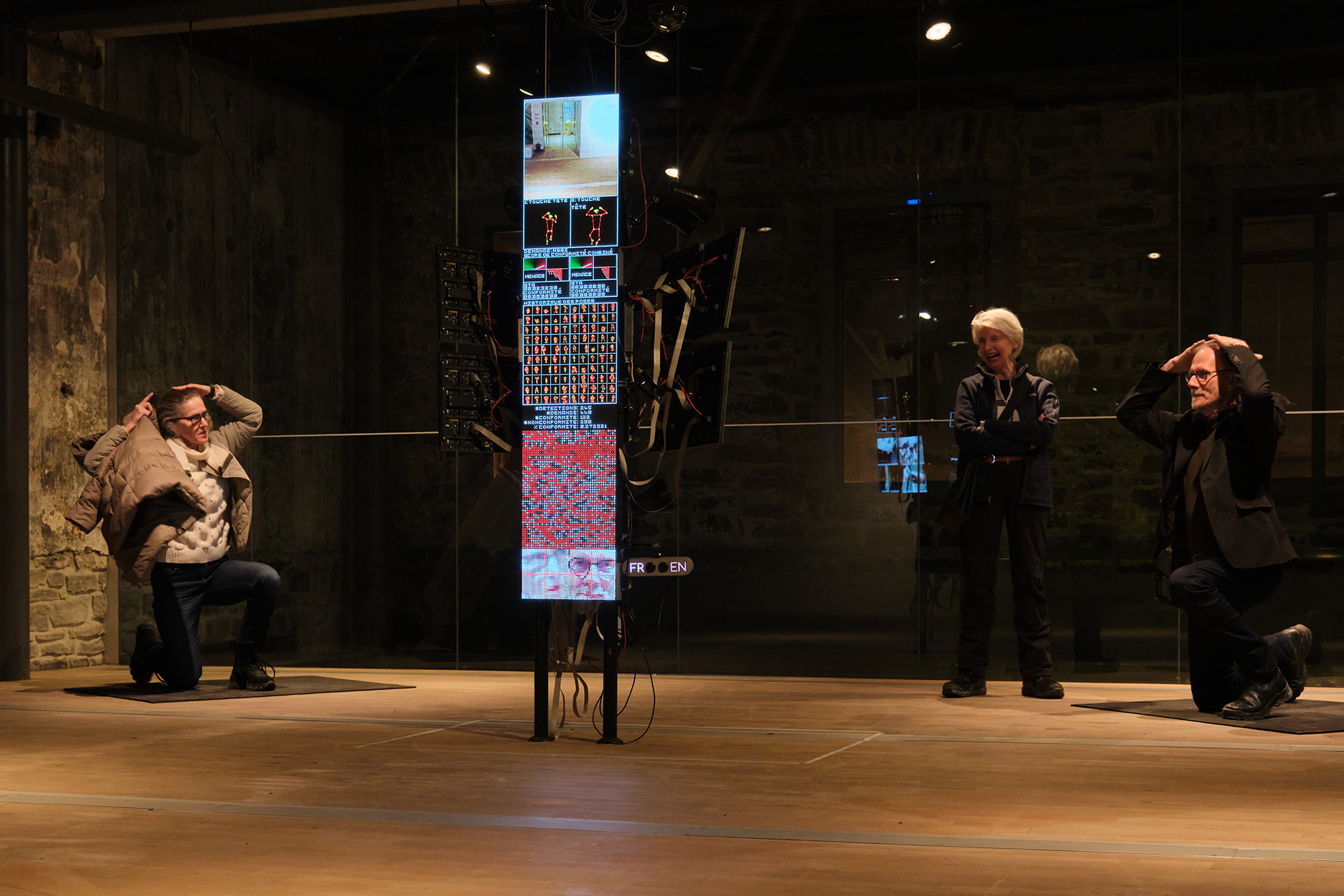
I don’t mean inventor in the sense of someone who patents a device. I mean someone who finds a use for a tool or asystem that its makers did not intend. Sometimes the idea comes first and I look for a technology to carry it. Sometimes the tool is the idea, a performance instrument I build and then explore by feel. I would argue that reuse is a form of invention. Nam June Paik and Steina and Woody Vasulka showed this with video, misusing the signal and building instruments to manipulate it as a medium. In my work Situational Compliance, pose estimation built to track bodies quietly in the background is put in front of peopl e and made into a pseudo-game, so they can see how a machine sees and judges. I did not modify the tool, only its use. In what I’m working on now, I go further and manipulate the models themselves, GANs and language models, to see what happens when they are altered. It is often an organic process, much like a classical inventor’s.I have ideas, I poke and prod them, and the materials respond. I believe an artist working with technology should get their hands dirty and see where and how the medium responds, much like an inventor creates a system to respond to an idea.
What interests you about working with data?
I’m wary of data-driven art. There isa misconception that whatever we see on a screen carries more weight because itis imbued with what the data says. I’m more interested in how we are turnedinto datapoints, how we become data through what Harun Farocki called theoperational image: images made by machines, for machines.
In the late nineties I made a diagram for Jim Campbell, under his direction, that he used in his talks and later published on his website and in the journal Leonardo as the “Formula forComputer Art.” Inputs on the left feed a computer and software, with a feedback loop through memory, and the output is anything at all: sound, image, kinetics. Many of my artist friends at the time asked what the difference was between using the stock market index and randomness. I still see works today that make me think the same thing.
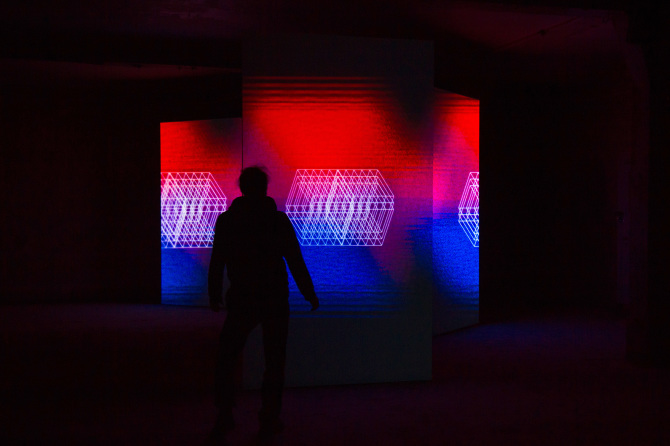
For me the answer is in the mapping.In Situational Compliance I expose a person’s body as data, and then the system judges it. The output is not an image or a sound. It is a judgement, a threat level. In STAR VALLEY a custom-trained neural network analyses the code names of US military operations in relation to one another, coupled with a Morse code spark-gap generator, one of the earliest forms of wireless communication.
Jim also made the point that thefirst time you encounter a responsive work you think it is smart, and the nexttime it becomes a command. I like to think of many of my works as a set ofrules for responding, sometimes to themselves, so the result is unpredictablebut stays within boundaries.
How are you working with artificial intelligence to raise questions and reflections on contemporary society?
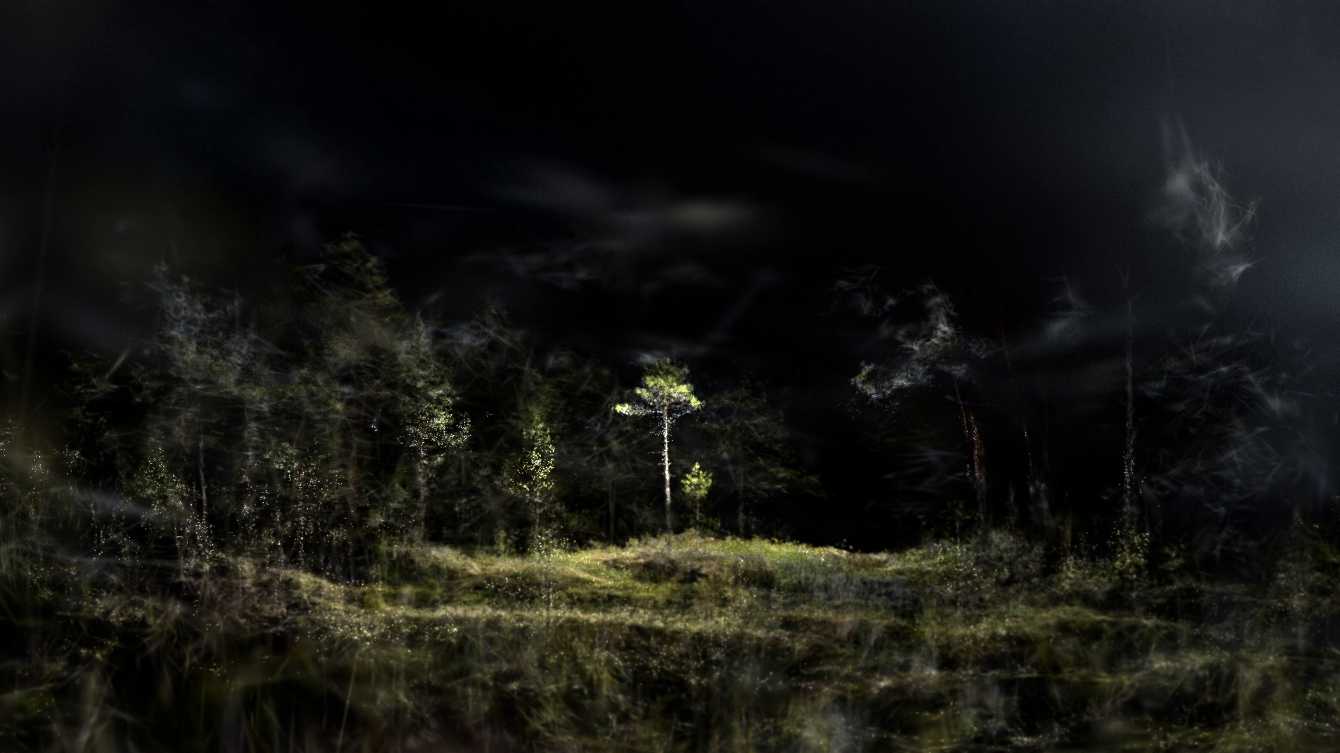
AI is such a large field that this isa hard question to answer. My works ask about the promises AI makes, who owns it, and how truly invested we are in it as a society, emotionally, ecologically, politically and financially. I hope they push back on those issues. Sometimes I do that by staking a claim technologically, using and promoting open models. Sometimes I point directly at AI’s lineage, from academic and military use to current commercial promise, and at the systemic world it is caught up in. Situational Compliance proposes a game in which the better you do, the harder it becomes to follow. A Generative AdversarialNetwork (2017) asks what it means to statistically create images from millimeter wave scans of airport passengers, images that are then judged by an algorithm. I am currently working with Pierce Warnecke on a series of objects within an installation, a broader attempt to bring these ideas together in as peculative future. If my work is always about how technology is understood and used in society, I can’t ignore AI in all of its forms.
What do you want the viewer to feelwhen engaging with your art?
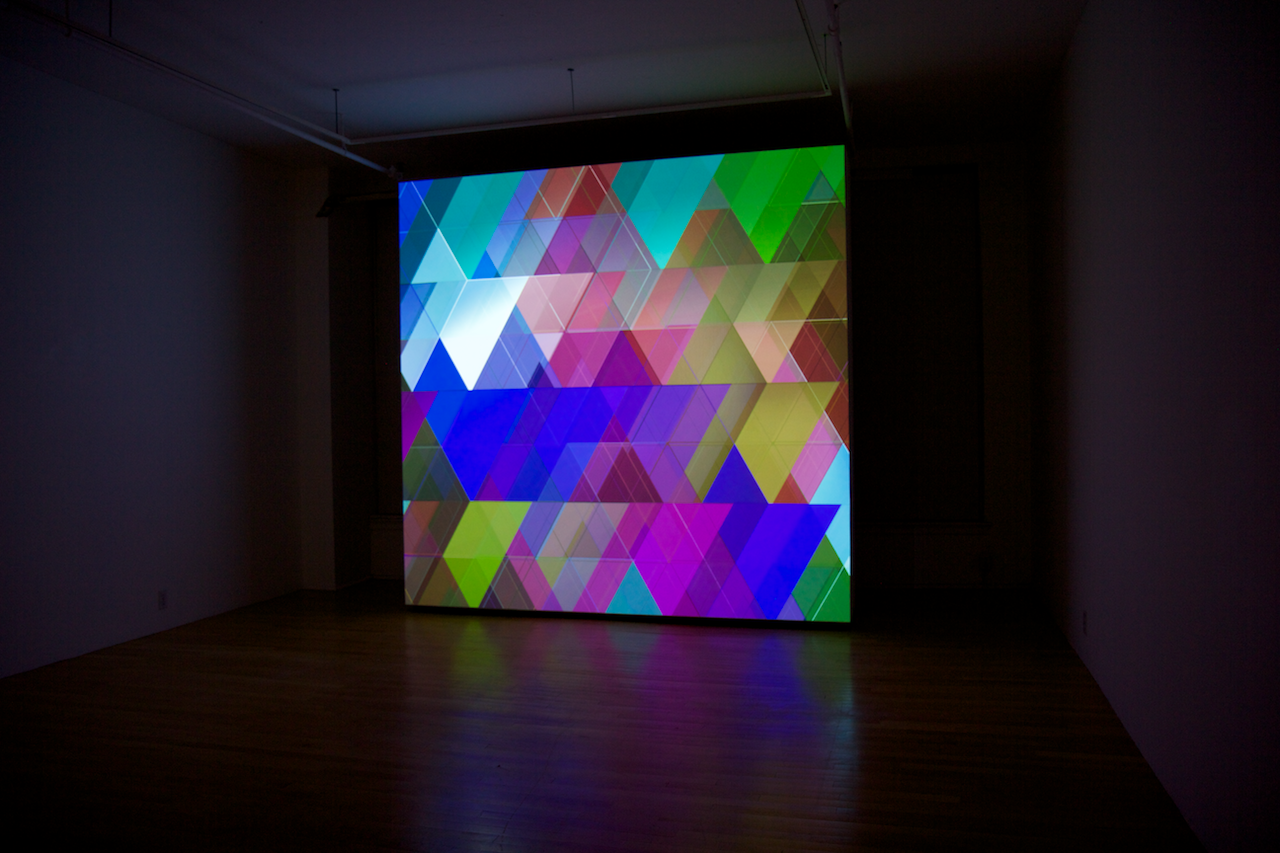
In the same way the idea dictates the work, the work shapes what a person might feel. Situational Compliance is confrontational, some of my single-channel work is quite meditative, and the audio-visual performances have a huge range. My work is multifaceted in that way, just as we all need moments of all of these feelings. I don’t make work that tries to dictate that myself. It would be presumptuous, and honestly kind of boring. If I knew how people would react, I’m not sure it would be much fun or exciting to produce. The very best artworks leave a lot open. Even a work that gives commands leaves a lot of room for how those commands are understood. We all come from different experiences, or at least we used to. With the great flattening of culture, now shared globally through social media’s influence, we are sadly losing some of the experiences that made us all unique. I believe art can bring that back.
