
Yoshi Sodeoka is a New York–based artist working with video, sound, generative systems, print, and installation. His practice explores movement, repetition, and patterns in nature, drawing on experimental music and decades of working with digital media. His projects include music collaborations, gallery exhibitions, and large-scale public works such as Isoray and Infinite Ascent.
1. Can you tell us about your artistic practice?
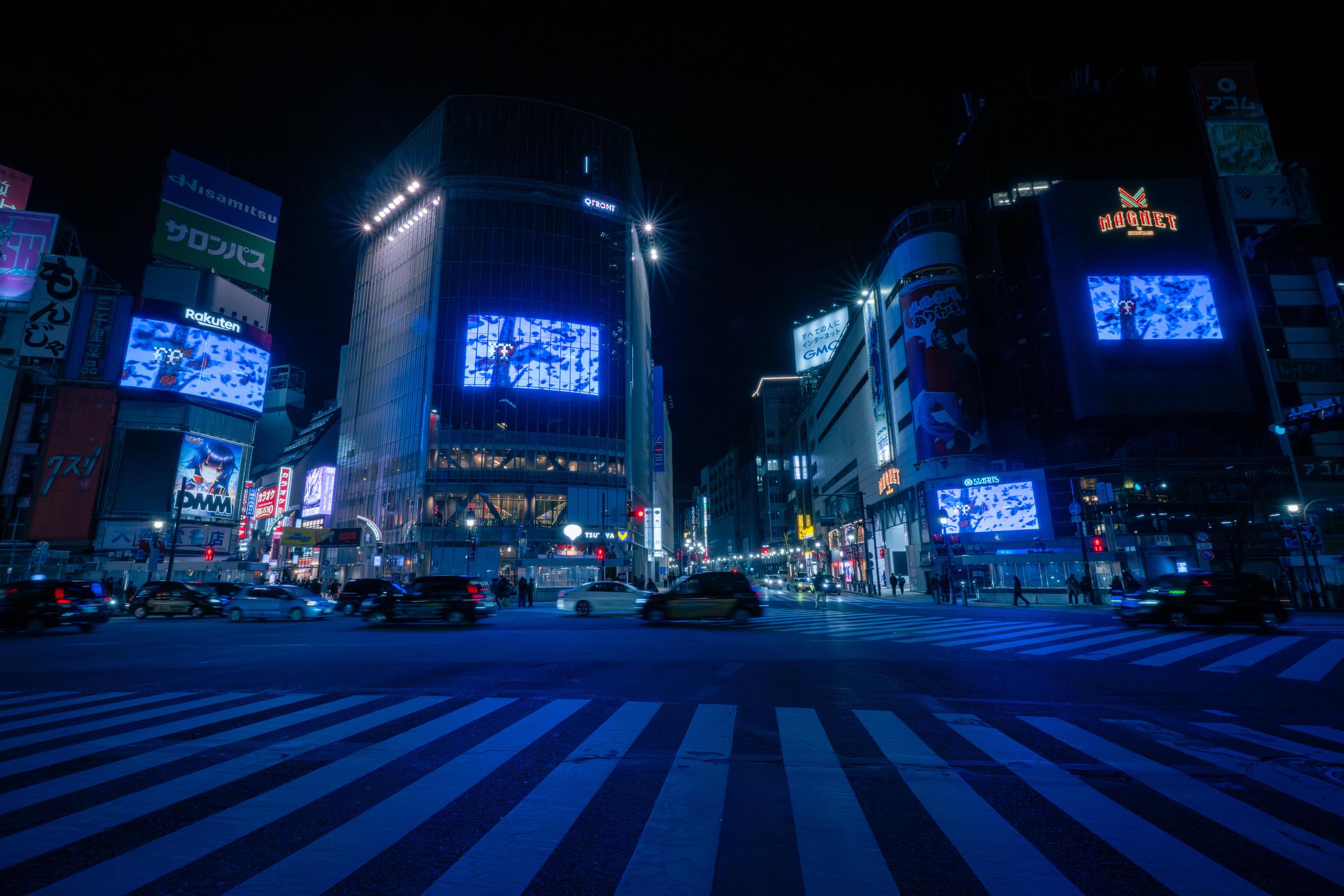
I work with video, sound, code, and print, and I also make installations. Experimental video has been at the center of my practice for a long time. I’m interested in systems, repetition, movement, and the point where something recognizable starts to become abstract. In my recent work, birds and flocking behavior have become a way to explore that. You can see individual birds, but you can also see the whole image as a field of moving points. I usually develop things through experimentation. Each project leads to another, and the tools and the way the work is presented keep changing.
2. Who are your biggest artistic influences?
A lot of my influences come from music and the visual culture around it. I grew up listening to punk and metal and playing guitar, and that background has stayed with me. Roger Dean and Storm Thorgerson are important influences, along with punk and new wave graphic artists like Barney Bubbles and Jamie Reid. Electronic music, noise, and experimental music have also shaped how I think about rhythm and structure. Beyond art and music, I’m drawn to scientific diagrams, interfaces, and data visualization. I’m interested in things that have a strong sensory quality and some kind of underlying logic.

3. What interests you about working with generative technologies?
I like building a system and seeing what happens within it. I can set up the elements and their relationships, but the result can still surprise me. That has been part of my work for years, including my experiments with video feedback. In Isoray, hundreds of virtual birds move through formations generated in real time. Simple rules can produce very complex movement, and the work can keep unfolding without a fixed beginning or end. I use new technology when it helps me do something conceptually or visually interesting.

4. How are you engaging with technology as a material?
I’ve described After Effects as my brush. I’ve used it for decades, including for still images and print work, and I’ve found ways to make it behave differently from how it was intended. My digital feedback process came out of a lot of trial and error, letting shapes and colors accumulate and transform. The limitations of a tool become part of the work too. Small file sizes and early animation tools shaped how I thought about repetition and time. Now I also work with real-time systems and code. Each tool gives me a different way to work with images, movement, and duration.

5. What do you want the viewer to take away from your work?
I hope something stays with them, but I don’t have one particular response in mind. I’m comfortable leaving the work open to different interpretations. Music is a useful comparison for me: you can connect with its rhythm or atmosphere without having to explain exactly what it means. With Isoray at Horst, I hoped the birds moving across the cooling towers would become part of someone’s memory of that night, part of the shared atmosphere. If the work creates curiosity or gives someone a different way of looking at something, that’s enough.
